April 2026
- May 1
- 5 min read
3 Months Left to Launch.
I remember reading this quote by Kevin Kelly a few years ago:
“When you have 90% of a large project completed, finishing the final details will take another 90%.”
But there’s another thing that happens when you have 90% (or more) of a large project completed.
It makes me think back to the Stockholm Marathon in 2022. My right knee locked after an hour, and for the next three hours I was miserable. I alternated between running, jumping, and shuffling.
But as I neared the finish line, my legs started working again. Not that I could sprint. But the pain was mostly gone, and I got an energy boost no caffeine in the world could match.
I could see the light. Not that light (haha). But the light of the finish line.
I’ve never worked more than I do now. Yet I’ve never been so energized. My alarm goes off at 5 am, but my brain often wakes me earlier.
No fights with the snooze button.
I just get up, eager to work and complete the book so you’ll be able to preorder it in August.
So what am I working on as the project nears completion? And what are these few percentages that aren’t done yet?
Three things.
1. The manuscript (97% done)
Despite seventy recipes recreated over a period of seven years, it feels wrong to call Table of Gods a cookbook. But when I do, I’m quick to add nuance.
In its essence, Table of Gods is a time machine that will take you and anyone you bring with you, back to ancient Mesopotamia.
Through the book you’ll learn how to host unforgettable dinners, tell stories of kings and gods, speak Sumerian and Akkadian, write your name in cuneiform, and much more.
So what’s left to finish the manuscript?
Over the years I’ve read over 300 books and papers that I’ve used as sources to write the manuscript and create the recipes.
But what if the sources I’ve used are outdated? What if I’ve interpreted them incorrectly?
To build out the bibliography of Table of Gods and add a final fact-checking pass, I’ve enlisted the help of Dr. Andrew Deloucas from Harvard University.
Deloucas is an Assyriologist who also helped me with the cuneiform signs for the cover (more on that below). We’ve set a deadline to complete the bibliography by the end of May.
2. Design (85% done)
Since I started writing Table of Gods in June 2019, I’ve worked with four designers.
The first two weren’t at the level I expected. The third worked in another time zone, making collaboration complicated.
The fourth is here in Stockholm and has been great to work with. Every other week since December, I’ve gone to their studio to experiment.
That’s what creative collaboration is all about. Experimenting.
Ideas often float. It’s hard to know if an idea is good until you put it to paper or paint—or bring it into the physical world in any other way.
Since I’ve already chosen the Table of Gods cover, the last few months have been about setting the interior pages.

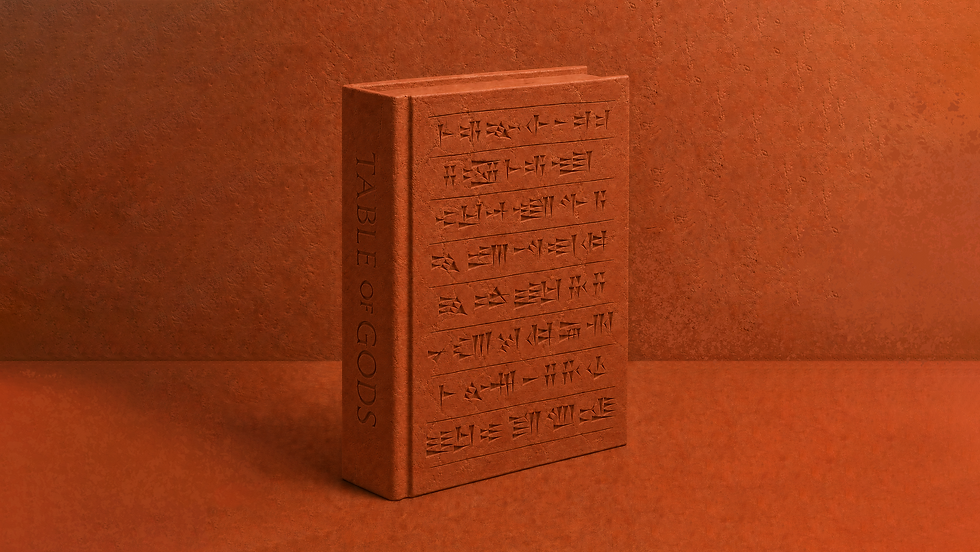
Here’s the evolution of the Table of Gods cover from 2021-2026. The first one is beautiful, but has the big title dominating the cover, making it feel modern. The second cover tries to be a clay tablet so much it fails. It doesn’t respect that the clay cover will live on paper. The third cover is exactly what I was looking for all the time. Clean. Unique. Memorable. But I wouldn’t know if I didn’t pay two designers to do the other ones. Btw, I designed the final cover :)
But the cover isn’t the only important design element of a book. I’d argue the design of the interior pages is as important.
That’s what we’re working on right now. How to present the recipes, short stories, travelogues, maps, and so on.
We’ve tried different illustration styles, fonts, colors, titles, and placements of texts.
Despite the history in Table of Gods, I don’t want it to read like a history book. The purpose of the book is not to educate. That’s the wrong way to go about education anyway.
Telling you all the facts about King Zimri-Lim will make you forget them a day later (think back to school).
But letting you meet Zimri-Lim, and having him guide you through his palace in Mari—where you’ll meet his wife Shibtu, his head chef Ama-Dugga, and his lead singer Beltani—makes it memorable.
The most challenging thing about setting the interior pages in Table of Gods is including all the content without making it look like a poorly designed Christmas tree.
This has been especially hard with the recipe pages which, besides including the recipe, must also fit a photo, a short story, and a short text about the recipe.
After months of testing, we’ve come close to a finished concept.
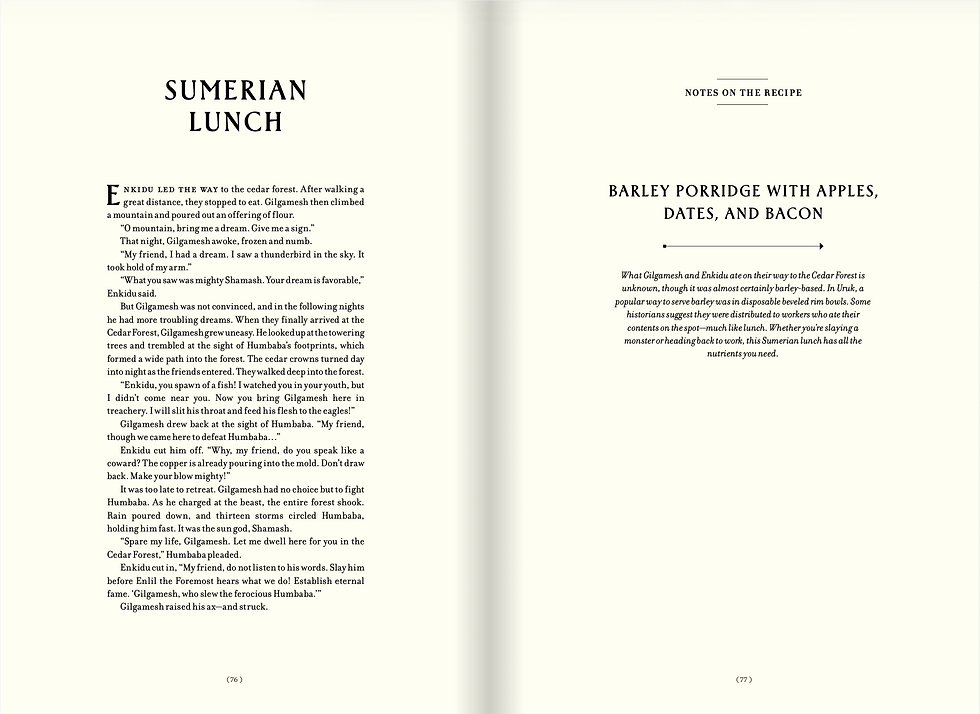
Each recipe starts with the short story, followed by the “notes on the recipe.”

The following spread has the recipe and the photo
3. Print tests (75% done)
The final part of completing the book is print testing. Most authors never see their book before it’s printed. I’m not most authors :)
We’re testing three things:
1. The cover
2. The interior art paper
3. The book packaging box
Getting the cover to look like my design mockup above has forced us to develop a special covering paper. We’ve done four lab tests so far but the paper is still not set in clay.
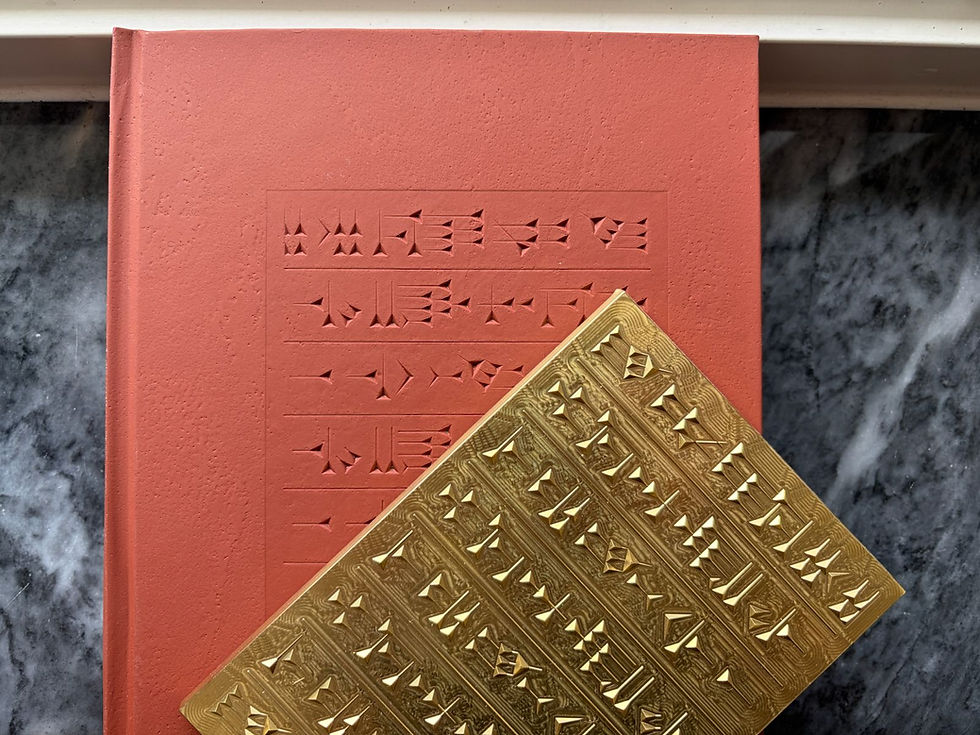
We’ve created seven dies so far. None has worked out. In the image above, the frame of the die is visible on the cover. Also, the cuneiform signs are too small and don’t slope like real cuneiform signs. We’re currently in the process of creating a new die to make another round of tests.
The interior paper is crucial for a book with over 100 pages of food photographs. I’ve already decided to use art paper, but there are many types. The only way to know which is best—is to test. We’ve done 14 print tests so far.

I believe in details. I believe in perfectionism. Real artists ship. But real artists also do whatever it takes to push their work as far as it can go.
The last thing we’ll test is the packaging of the book. The unboxing experience must do justice to what’s inside.
We’re still in the early stages and haven’t completed the first prototype.

Here are some sketches from last week. We’ve been thinking about packaging the book in a kind of traveling bag. But the creative process is always messy and wild at the start. I’ll let you know as soon as it takes shape.